When raw sewage threatens your home or recurring backups stall your routine, you need definitive answers—not temporary guesswork. We specialize in high-definition video diagnostics, no-dig trenchless pipe lining, and long-term sewer lateral replacement engineered for Southern Colorado’s punishing clay soils.
Serving Pueblo West (81007), Pueblo, Penrose, Cañon City, Florence, and Beulah. Dispatched locally from 49 Precision Dr.
HD Video Inspection
Pinpoint Exact Depth & Location
Trenchless No-Dig CIPP
Preserves Lawns & Concrete
Hydro Jetting (4,000 PSI)
Roots & Mineral Descaling
Comprehensive Sewer Infrastructure Care
Complete Sewer Line Solutions in Pueblo West
From the initial non-destructive camera diagnostic to long-lasting structural rehabilitation, we handle every stage of your home's waste line with commercial-grade equipment and master-level workmanship.
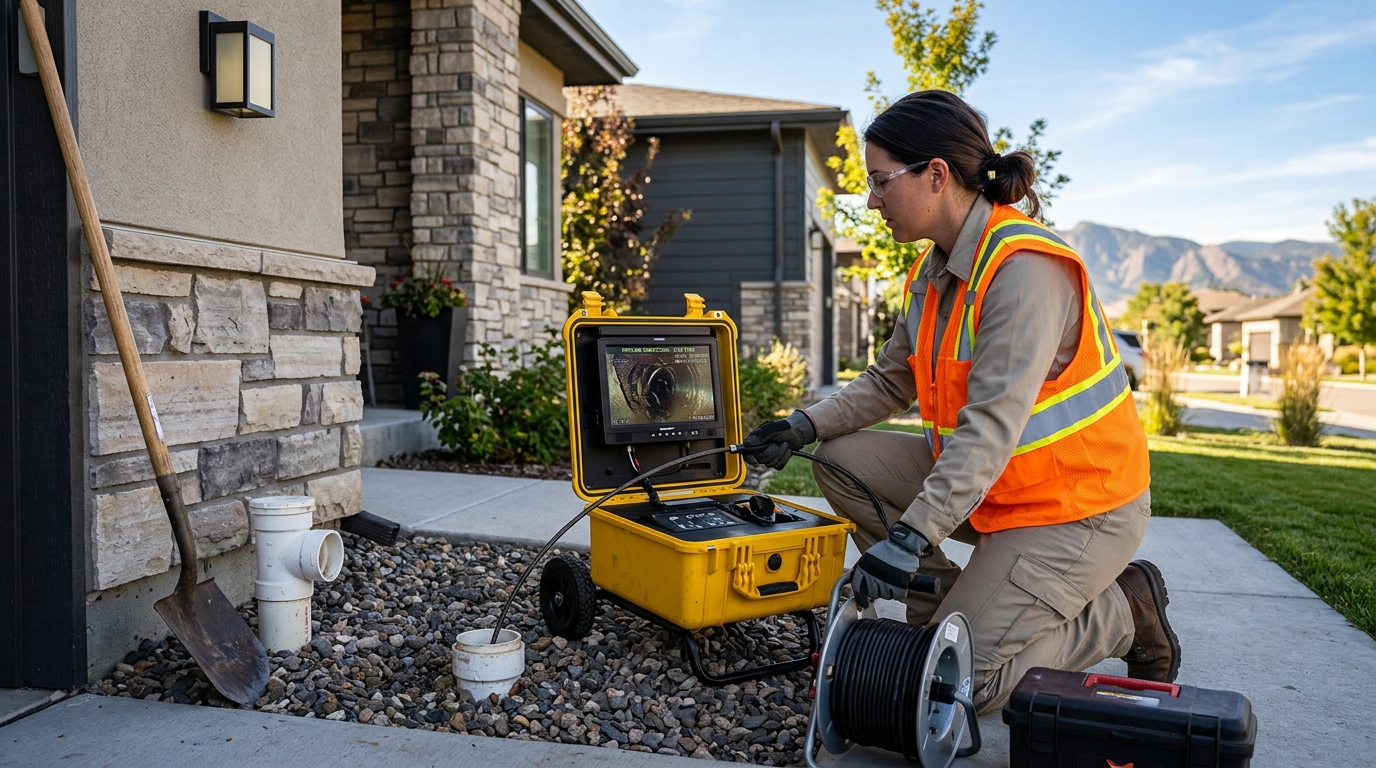
High-Definition Sewer Camera Inspection
Never authorize excavation or major plumbing repairs on guesswork alone. Our self-leveling color video cameras travel through your entire main lateral up to 200 feet, transmitting clear, real-time footage of your pipe interior. We pinpoint the exact depth, distance, and physical nature of root infiltration, bellied segments, cracked clay hubs, or shifted connections beneath your property.
Every diagnostic scope includes a digitized recording and a comprehensive written assessment detailing repair feasibility. Learn how an inspection saves thousands on unneeded digging with our dedicated sewer camera inspection guide.
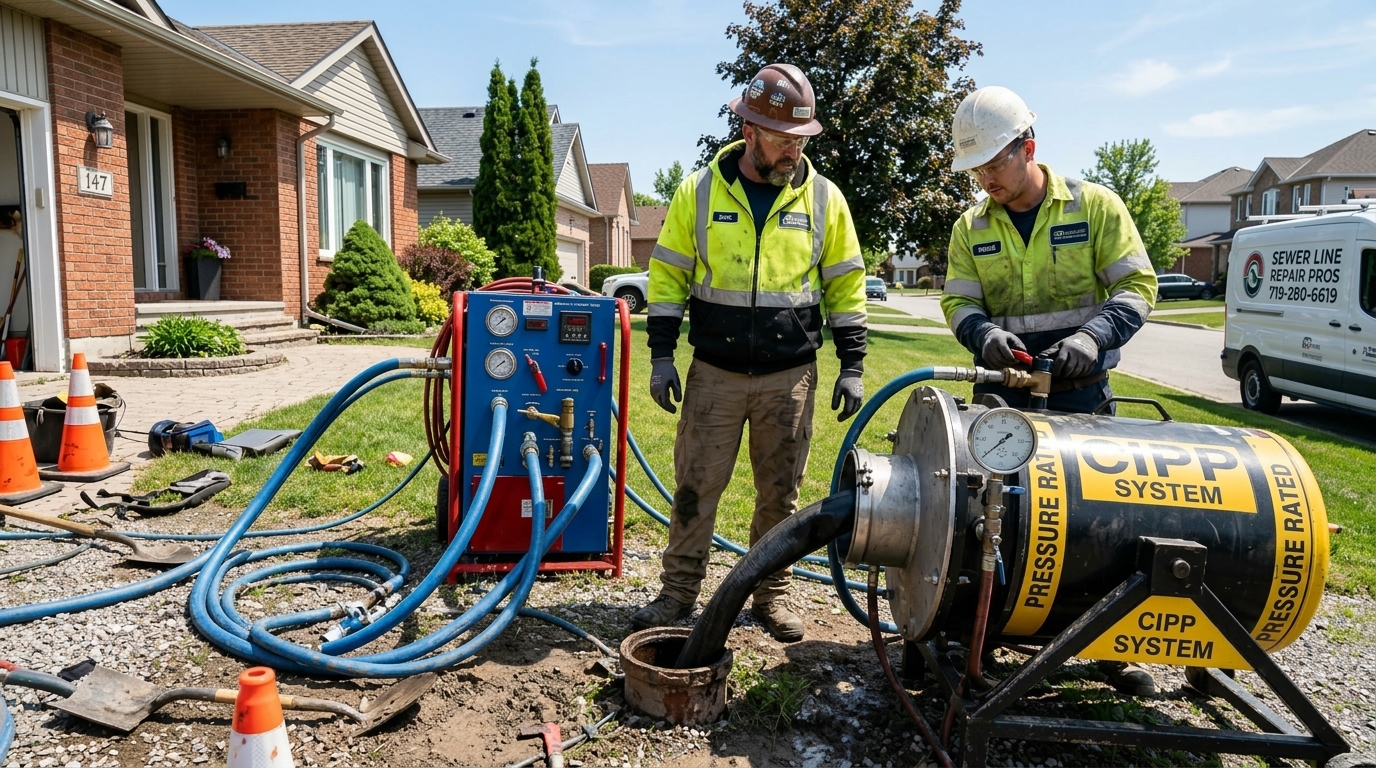
Restore broken or compromised sewer lines without destroying your driveway, flagstone patio, or mature trees. Utilizing Cured-In-Place Pipe (CIPP) lining and pipe bursting techniques, we create a seamless, joint-free epoxy pipe inside your existing damaged host pipe.
Trenchless lining completely blocks root re-entry and resists ground movement from Pueblo West clay soil. Explore our no-dig technology on the trenchless sewer repair page.
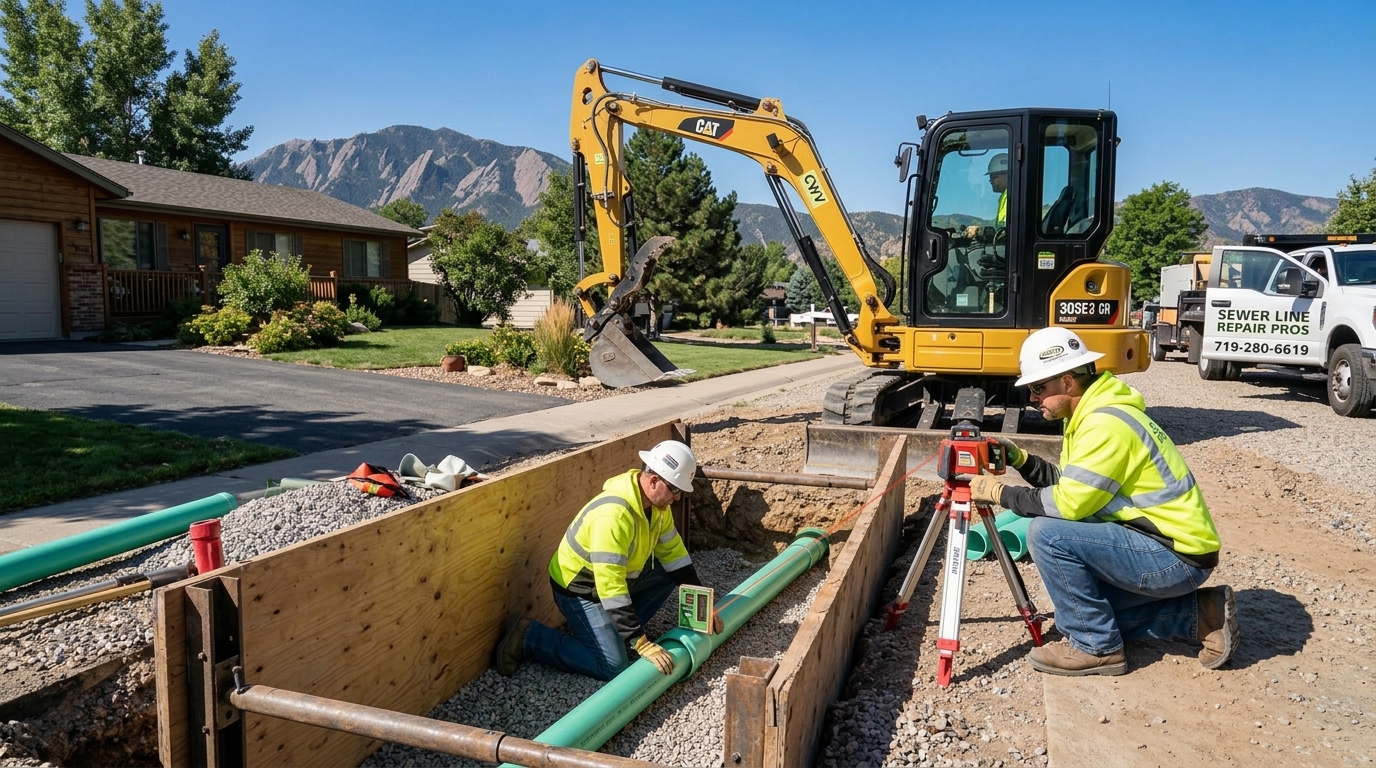
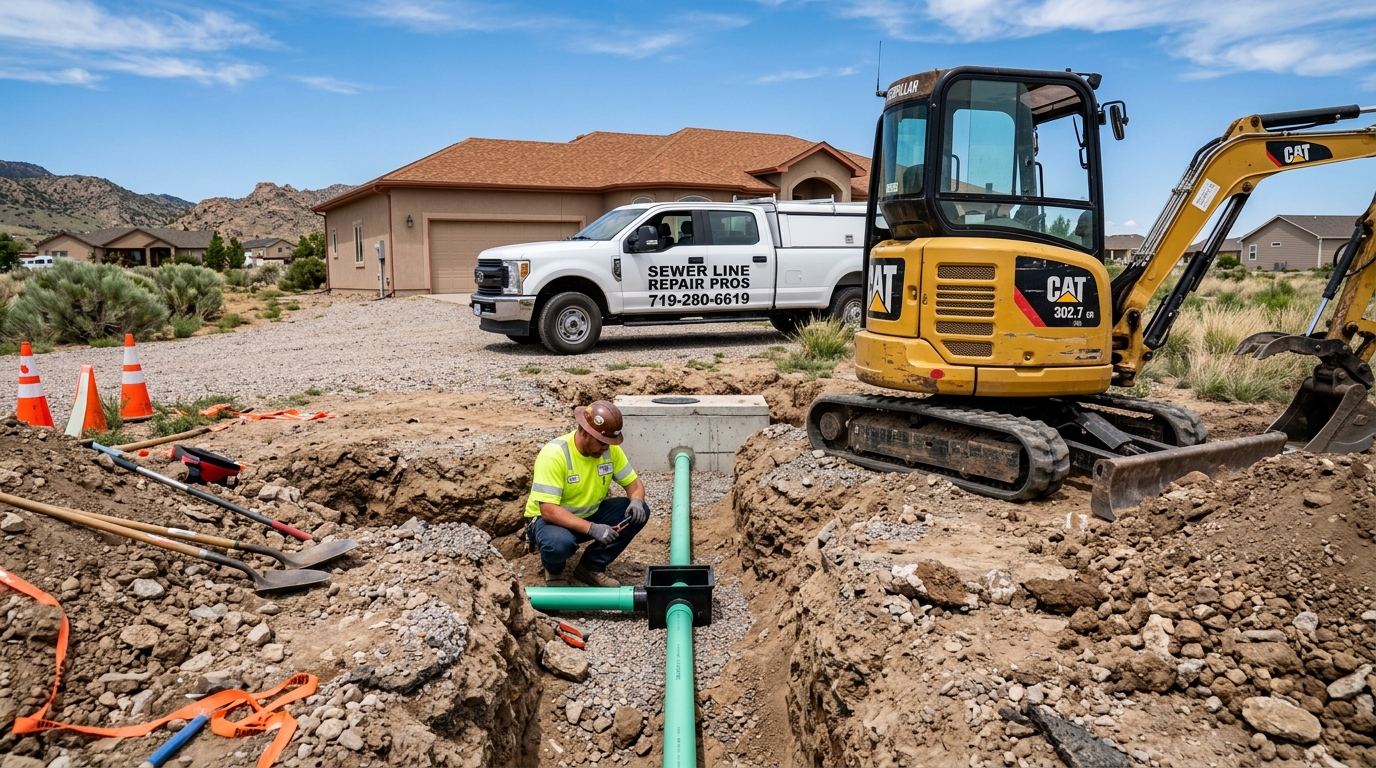
When a sewer line has completely collapsed, suffered severe negative slope (bellying), or decomposed beyond the reach of lining, traditional excavation and pipe replacement is the only safe, permanent answer.
We handle the entire process from municipal utility marking and trench shoring to installing SDR-35 PVC pipe and backfill compaction. Review timelines and permits on our sewer line replacement service page.
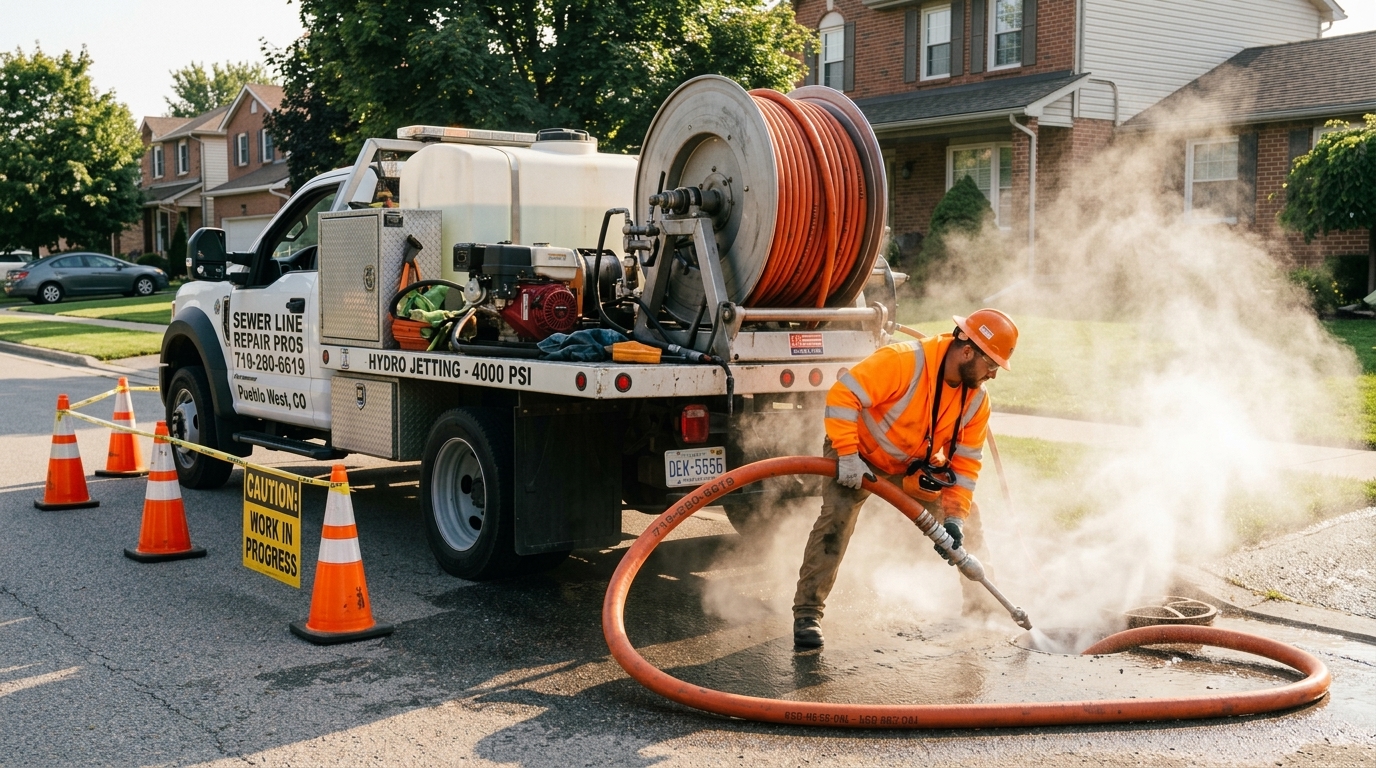
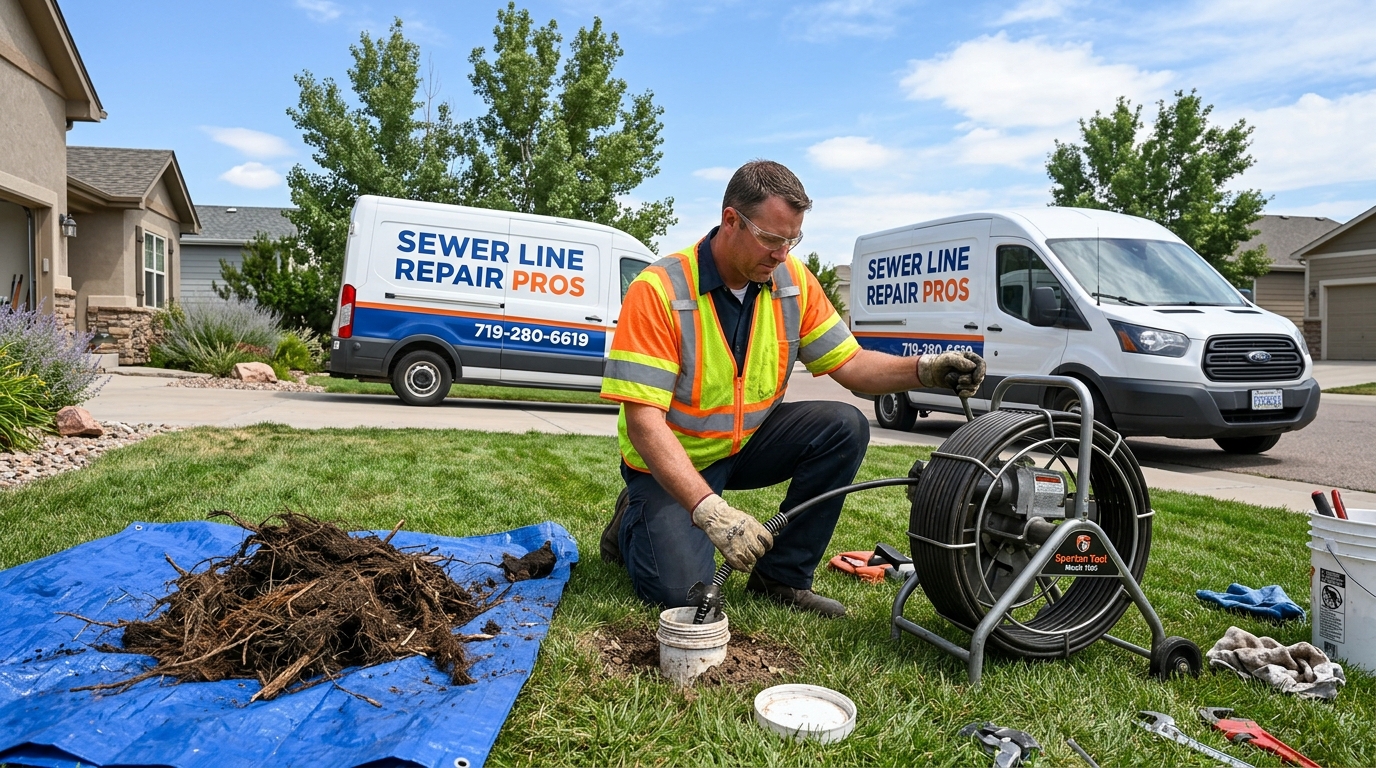
Mechanical drain snakes merely punch a small hole through soft clogs, leaving heavy mineral buildup, thick grease walls, and fibrous root systems behind. Hydro jetting uses specialized rotational nozzles blasting water at 3,500 to 4,000 PSI to scour your pipe walls back to bare metal or PVC.
It is the ultimate preventative maintenance treatment and an essential prep step before pipe lining. Read full specifications on our hydro jetting page.
Underground sewer leaks do not always reveal themselves with dramatic floor backups. Hidden leaks saturate foundation soil, causing slab settlement, foul sewer gas odors, and unexplained sinkholes in your yard.
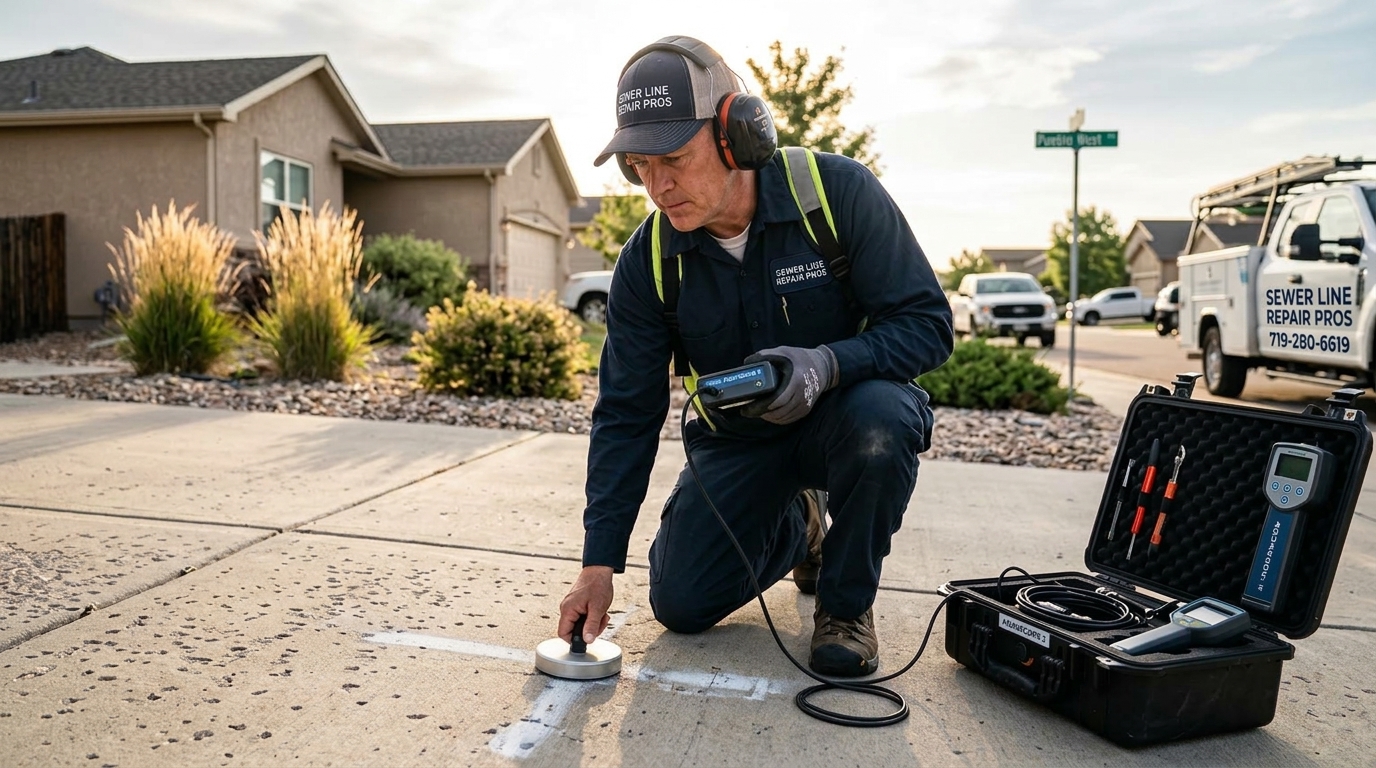
We employ electronic sonde tracing, acoustic ground listening devices, static isolation head pressure testing, and vapor smoke testing to identify the exact origin of wastewater leaks. Review our methods on the sewer leak detection page.
When raw blackwater backs up through basement floor drains or floods a bathroom, you cannot wait until normal business hours. Blackwater poses immediate biological health hazards and causes rapid structural rot to subfloors and drywall.
Our emergency trucks roll fully equipped with heavy-duty diagnostic scopes, high-capacity jetters, and pipe isolation tools to immediately halt the overflow, extract main lateral obstructions, and secure your property. For rapid dispatch details, visit our emergency sewer repair page or dial (719) 280-6619 right now.
Invasive cottonwood, Siberian elm, and willow tree roots are the #1 cause of recurring lateral backups in Pueblo West. Our heavy-duty electric rooter machines with expanding rotary carbide saw blades sever thick woody taproots flush against pipe walls.
We combine mechanical root sawing with hydro jetting flushes and permanent trenchless CIPP epoxy relining to guarantee roots never return. Read more on our tree root removal page.
For acreage properties and unincorporated Pueblo County parcels, we provide precision excavation, damaged septic transfer line replacement, distribution box (D-box) rebuilds, and complete turnkey septic-to-municipal sewer conversions.
All work is installed with laser-graded SDR-35 PVC pipe and strictly complies with Pueblo City-County Health Department OWTS regulations. Learn more on our septic line repair page.
Why Sewer Lines Fail in Pueblo West & Pueblo County
Pueblo West is known for wide open vistas, sunny high-desert weather, and sweeping views of the Wet Mountains and Pikes Peak. However, beneath your landscaped lawn and concrete driveways lies one of the most hostile subterranean environments for sewer piping in the United States.
The predominant geological stratum across Pueblo County consists of Pierre Shale and high-plasticity bentonite clay. This clay exhibits dramatic shrink-swell characteristics. During spring snowmelt or heavy southern Colorado monsoon cloudbursts, bentonite clay absorbs vast quantities of water, swelling with hydraulic pressures capable of lifting concrete slabs and cracking rigid clay or cast iron pipe segments.
Conversely, throughout the scorching, arid summer months along the US-50 corridor, the soil completely desiccates, shrinks, and contracts. This endless annual cycle places enormous shearing force on pipe joints. As joints shift even a fraction of an inch, water vapors escape into the dry ground.
In our semi-arid climate, thirsty native cottonwoods, Siberian elms, and residential shade trees detect this subterranean moisture with microscopic root hairs. These hair-like tendrils penetrate the loosened joint, flourish on the constant flow of nutrients inside the sewer, and rapidly expand into dense, wooden root balls that choke the pipe and catch toilet paper and solids.
Pueblo West Metropolitan District (PWMD) Responsibility Boundary
Many Pueblo West property owners mistakenly assume the local water and sanitation district maintains sewer lateral pipes once they leave the foundation. Under PWMD district regulations, the homeowner owns and is 100% financially responsible for the lateral line from the building's exterior cleanout all the way to the physical connection tap at the main collection sewer—including any portion running under the street or public sidewalk.
Early Problem Detection
Warning Signs Your Sewer Lateral Is Failing
Catching sewer line damage before total collapse prevents catastrophic basement flooding and thousands of dollars in contaminated interior remediation. Watch for these telltale indicators on your property.
Multiple Synchronized Slow Drains
When a single sink drains slowly, the issue is usually soap scum or hair in the P-trap. If the kitchen sink, master shower, and basement laundry all drain sluggishly at once, the restriction is inside the central sewer trunk line.
Gurgling Fixtures & Bubble Backups
Do your toilets make a distinctive gurgling sound or burp air bubbles when the washing machine drains or the dishwasher cycles? That sound occurs when trapped sewer air is forced backward through water seals by a downstream obstruction.
Persistent Sewer Gas Odors
A functioning sewer line is completely airtight. If you smell rotten egg or hydrogen sulfide odors in your basement, crawlspace, or around the foundation perimeter, a cracked lateral or dry trap is venting sewer gas directly into your living spaces.
Unusually Lush, Wet Lawn Patches
In arid Pueblo West where lawns require deliberate irrigation, an isolated patch of abnormally bright green, spongy, or soggy grass directly over the sewer line path signals underground wastewater leakage fertilizing the surface turf.
Lawn Depressions or Paver Sinkholes
When a compromised underground pipe leaks continuously, the rushing wastewater washes away surrounding sand bedding and backfill dirt. The resulting subterranean void eventually causes pavers, driveways, or topsoil to suddenly sink inward.
Water Surfacing in Low Drains
When flushing an upstairs toilet causes water to push upward into a basement shower drain, utility sink, or floor drain, the main exit lateral is almost fully blocked. This requires prompt emergency intervention before flooding worsens.
Predictable, Transparent Execution
Our 5-Step Sewer Line Diagnostic & Repair Process
Sewer issues feel chaotic, but the resolution shouldn't be. Here is our exact, systematic engineering workflow from your initial phone call to the final underground camera verification.
01
Prompt On-Site Arrival & Cleanout Access
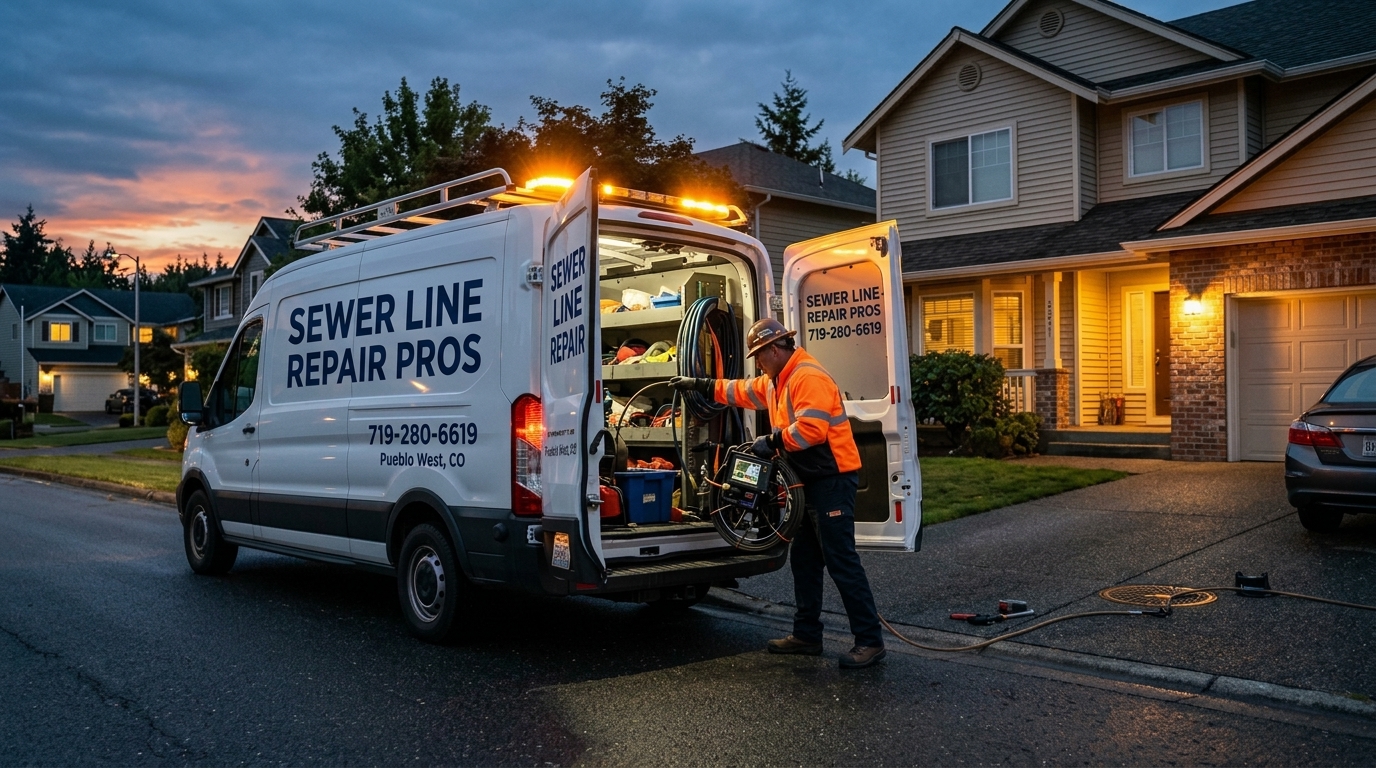
Our technicians arrive in fully equipped mobile service rigs with diagnostic reels, locators, and cleanout tooling. We locate your primary exterior cleanout (typically located near the front foundation wall or utility meter). If no exterior cleanout exists, we access the system through an interior basement stack or pull a ground-floor toilet cleanly with protective floor coverings.
02
High-Resolution Optical Video Diagnostic
We guide a military-grade optical camera through the entire lateral to the municipal main. A digital footage counter and electromagnetic sonde transmitter track precisely how many feet downline any obstruction or structural breakdown sits. We view the live feed together on high-contrast monitors so you see the exact interior condition of your line in real time.
03
Engineering Options Review & Upfront Estimate
We present you with clear, itemized solutions based on your pipe's structural integrity. If the line is intact but root-choked, we recommend hydro jetting. If it has localized cracks or joint separations, we detail trenchless CIPP pipe lining. If collapsed, we map out open-cut replacement. You receive a guaranteed written quote before any work starts.
04
Precision Repair Execution
Whether hydro jetting at 4,000 PSI, pulling an epoxy resin liner sleeve through the cleanout without digging, or completing a precision excavation with laser-guided grade lasers, our licensed crew executes the repair to strict Colorado Uniform Plumbing Code (UPC) and Pueblo West Metro District standards.
05
Final Verification Video & Digital Documentation
We never leave until we run a final post-repair camera scope showing the rehabilitated pipe flowing at 100% capacity with smooth, watertight interior walls. You receive a copy of this video recording for your homeowner records, warranty files, or real estate disclosure packages.
Making the Right Financial Choice
Trenchless Pipe Lining vs. Traditional Excavation
For decades, repairing a broken sewer line meant bringing an excavator into the front yard, ripping up sod, tearing out concrete driveways, and disrupting traffic for days. Today, modern trenchless technology offers a non-invasive alternative for eligible pipes. Compare the two methods below.
Factor
Trenchless CIPP Pipe Lining
Traditional Open-Trench Excavation
Property Disruption
Minimal to none. Access is gained through existing cleanouts. No lawn, tree root, or driveway destruction.
Significant. Heavy backhoes excavate a 4 to 8-foot-deep trench across landscaping, sidewalks, or paved driveways.
Project Duration
Completed in 1 to 2 days. The resin cures within hours, restoring full service the same day.
Takes 3 to 6 days for trenching, pipe laying, municipal inspections, backfilling, and surface patching.
Secondary Restoration Costs
$0 in landscape or concrete restoration. What you spend on lining is your total expense.
Homeowners frequently spend an additional $2,000–$7,000 re-pouring concrete driveways, repairing pavers, and re-sodding lawns.
Expected Service Life
50+ years. The seamless epoxy resin core is impervious to root intrusion and chemical corrosion.
50–100 years when installed with heavy-duty SDR-35 PVC pipe properly bedded in pea gravel.
When It Works Best
Cracked clay, root infiltration at joints, pinhole leaks, pinhole rust along cast iron bottoms, intact grade.
Completely collapsed pipes, completely crushed lines, back-pitched pipes with severe bellies, or missing pipe walls.
Average Cost in Pueblo West
$4,000 – $9,500 total (all-inclusive, no restoration required).
$5,000 – $13,000+ (plus landscape, fence, and driveway restoration).
*Estimates reflect regional averages for Pueblo County, Colorado. Exact costs depend on lateral run distance, pipe burial depth (typically 4–7 feet in Pueblo West), street cut permit requirements, and pipe diameter.
Both methods meet Colorado plumbing code: We pull all mandatory plumbing permits and coordinate required Pueblo West Metro District utility inspections before sign-off.
Trenchless preserves property value: Avoid scarring mature shade trees and historic stonework that took decades to establish on your Pueblo West estate lot.
Know What Lies Beneath
Common Sewer Pipe Materials Found in Pueblo County
Pueblo West and nearby communities like Pueblo, Florence, and Cañon City feature a diverse cross-section of home ages—from historic turn-of-the-century brick bungalows to 1970s split-levels and modern custom acreage estates. The material of your sewer lateral dictates its typical failure points.
Vitrified Clay Tile
Common in older regional construction prior to the 1970s. While clay itself does not corrode from wastewater chemicals, it was installed in short 2- to 3-foot sections joined with mortar or tar-soaked oakum. Over decades, Pueblo clay soil shifting breaks these mortar seals, creating an open gateway for tree roots at every single joint.
Typical Solution: Hydro jetting root clearing followed by continuous trenchless CIPP lining.
Cast Iron
Widely installed from the 1950s through the late 1970s. Cast iron is mechanically robust, but the bottom invert of the pipe gradually corrodes over 40–50 years from acidic sewer gasses and wastewater friction. This creates a rough internal scale (tuberculation) that snags toilet paper and flushes, eventually rotting out the pipe's bottom entirely.
Typical Solution: High-speed mechanical descaling and internal epoxy sleeve lining.
Modern PVC / ABS Plastic
Standard in newer Pueblo West subdivisions built from the 1980s through today. PVC (Schedule 40 or SDR-35) features smooth, glued, gasketed joints that are impervious to rust and naturally resist root penetration. However, in Pueblo West's expansive soils, improper initial trench compaction can cause plastic pipes to bow downward into low "bellies" that pool wastewater.
Typical Solution: Spot excavation and regrading with stone bedding.
Local Coverage Across Southern Colorado
Service Areas We Cover Along the Arkansas River Valley
Headquartered at 49 Precision Dr in Pueblo West, our mobile sewer units provide rapid service throughout Pueblo and Fremont Counties. Click a community below to learn more about localized soil conditions and repair services in your area.
Frequently Asked Questions About Sewer Line Repair
Have questions about repair timelines, municipal regulations, or diagnostic cameras? Here are direct answers from our senior master technicians.
How do I know if my Pueblo West home needs sewer line repair instead of a simple drain cleaning?
When a single fixture (such as a bathroom vanity or kitchen sink) drains slowly, the obstruction is usually isolated to that fixture’s trap. However, if multiple fixtures back up simultaneously (for instance, flushing an upstairs toilet forces water to bubble up into the basement shower or laundry drain), or if foul sewer odors permeate the home, the restriction is inside your primary sewer lateral.
An in-depth sewer camera inspection is the only reliable way to verify whether the line simply needs hydro jetting cleaning or has suffered physical structural collapse, bellied sections, or root displacement requiring repair.
What is trenchless sewer repair and how does it benefit my property?
Trenchless sewer repair rehabilitates or replaces subterranean sewer pipes without digging extensive, damaging trenches across your front yard, paved driveway, or landscaping. Using Cured-In-Place Pipe (CIPP) lining, we saturate a flexible felt liner with high-grade epoxy resin, invert it through an existing cleanout access point, and inflate it inside the damaged pipe.
Within several hours, the epoxy cures rock-hard, creating a joint-free, root-proof pipe-within-a-pipe that carries a 50-year lifespan. Learn more about the procedure on our trenchless sewer repair page.
Who is responsible for sewer pipe repairs: the homeowner or the Pueblo West Metro District?
Under the rules and regulations of the Pueblo West Metropolitan District (PWMD), property owners are legally and financially responsible for the entire private sewer lateral line. This responsibility begins at the home's exterior cleanout and extends all the way to the physical connection saddle (the "tap") where the lateral joins the district’s central sewer main in the street or utility easement.
Even if a root blockage or pipe collapse occurs under the public street or parkway strip before reaching the district main, the repair remains the property owner's obligation.
How much does sewer line repair or replacement cost in Pueblo West, CO?
The cost of sewer repair varies based on burial depth, pipe length, accessibility, and the chosen rehabilitation technology. Spot repairs or clearing root obstructions via commercial hydro jetting typically range from $450 to $1,800. Trenchless epoxy lining generally runs between $4,000 and $9,500 depending on lateral length, saving thousands on repaving driveways or replacing mature landscaping.
Full traditional excavations with comprehensive SDR-35 PVC replacement range from $5,000 to $13,000+ depending on street cutting and backfill compaction requirements. We provide full, transparent written estimates following our initial on-site camera diagnostic.
How do expansive clay soils and winter freeze-thaw cycles affect sewer laterals in Southern Colorado?
Southern Colorado's high-plasticity bentonite and Pierre shale clay soils expand significantly when wet and contract dramatically during arid dry spells. This cyclical movement exerts severe shearing pressure on rigid subterranean pipes, snapping brittle clay hubs and pulling cast iron joints apart.
Furthermore, winter freeze-thaw cycles alter soil density in the top 36–48 inches, accelerating joint failure. Once joints open, water vapor escapes into the dry soil, drawing aggressive tree roots straight into the sewer pipe.
How quickly can you respond to an emergency sewer backup in Pueblo West?
We maintain active 24/7 on-call emergency crews based right here at 49 Precision Dr in Pueblo West. For critical emergencies—such as raw sewage backing up into basements or active yard sinkholes—our average arrival window is within 60 to 90 minutes.
Our service trucks arrive equipped with heavy-duty diagnostic camera scopes, high-capacity jetting units, and line clearing augers to stabilize your system immediately. Call us immediately at (719) 280-6619 for emergency assistance.
Local Ownership & Professional Integrity
About Sewer Line Repair Pros
We founded Sewer Line Repair Pros with a straightforward philosophy: homeowners facing sewer crises deserve honest engineering, transparent pricing, and permanent solutions rather than high-pressure sales tactics. We don't guess what's underground—we show you the camera footage, explain your options clearly, and treat your property with the utmost respect.
Learn more about our licensing, team, and state-of-the-art trenchless equipment on our About Us page, or reach out directly to schedule a routine camera inspection or emergency service via our Contact page.
Homeowner Knowledge & Prevention
Latest Sewer Insights & Maintenance Guides
Understand the warning signs of lateral failure, compare trenchless repair costs, and learn how Southern Colorado's expansive soils affect your plumbing.
Recognize the early physical signs of lateral collapse—including gurgling drains, lush lawn patches, and sewer gas odor—before catastrophic basement flooding occurs.
A factual side-by-side engineering analysis comparing CIPP epoxy lining against open-cut excavation, analyzing total costs, landscape restoration, and 50-year durability.
Discover the geotechnical mechanics of Pierre Shale and bentonite clay, how shrink-swell cycles shear pipe joints, and modern strategies to safeguard your waste lines.
Whether you have slow drains, recurring root clogs, or raw sewage in the basement, our Pueblo West master technicians are standing by 24 hours a day, 7 days a week.