
How Expansive Pierre Shale Clay in Pueblo West Destroys Underground Sewer Pipes
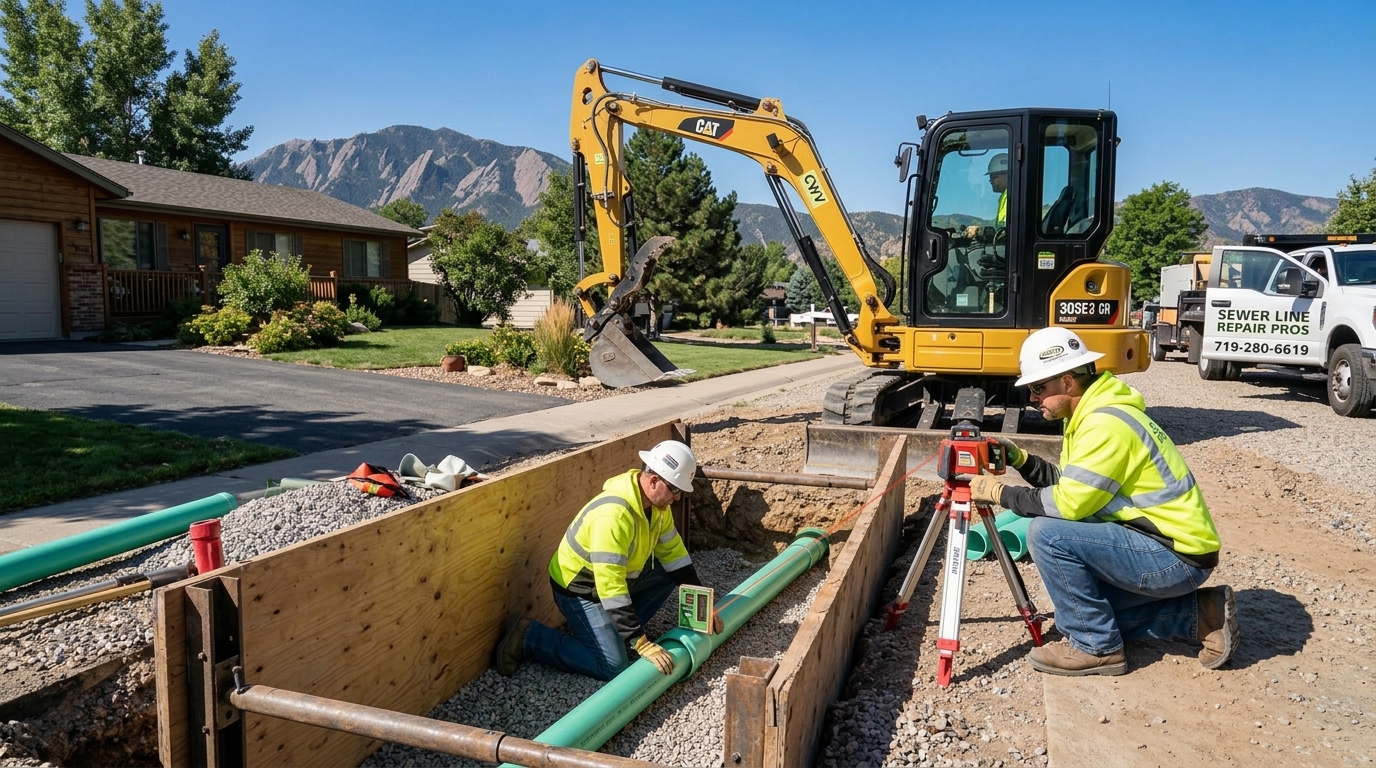
When homeowners in Pueblo West experience chronic sewer blockages, they often blame flushable wipes, grease, or trees. While those factors certainly aggravate clogs, the true villain is almost always lurking directly beneath the soil: Pierre Shale and expansive bentonite clay.
Pueblo County sits atop one of the most active expansive clay soil deposits in North America. Understanding how this geological formation behaves across southern Colorado's seasons explains why sewer pipes shear, sag, and fail at rates far higher than the national average.
The Shrink-Swell Mechanism of Bentonite Clay
Bentonite is an absorbent aluminum phyllosilicate clay formed millions of years ago from weathered volcanic ash. In dry conditions, its microscopic crystalline sheets are tightly compressed. But when exposed to moisture, water molecules infiltrate between the sheets, forcing them apart.
In Pueblo West, this creates a violent annual cycle:
- Spring Moisture & Monsoon Rains: When winter snow thaws or intense July thunderstorms saturate the topsoil, the clay expands by up to 15% to 20% in volume. This expansion generates thousands of pounds per square foot of upward hydraulic pressure.
- Arid Summer Desiccation: From August through October, 90°F heat and low humidity bake the soil dry. The clay shrinks, opening deep vertical fissures and causing the ground beneath underground utilities to settle unevenly.
3 Ways Expansive Clay Destroys Sewer Laterals
1. Hub Shearing & Offset Joints
Traditional sewer laterals installed throughout Pueblo County prior to the 1990s consist of vitrified clay tile or cast iron sections joined every 2 to 5 feet. When the ground beneath one pipe section heaves upward while the adjacent section remains anchored, the rigid joint shears. Even a half-inch offset creates a jagged interior lip where toilet paper and waste solids snag and accumulate.
2. Sewer Pipe Bellies (Low Spots)
Sewer lines rely entirely on gravity, requiring a minimum downward pitch of 1/4 inch per foot. When expansive soil expands and then contracts, the native soil beneath the middle of a pipe run often collapses. The pipe sags into the void, creating a "belly" or low spot. Standing wastewater fills the belly permanently, slowing water velocity and causing grease and waste to settle into a thick sludge dam.
3. Accelerated Tree Root Infiltration
When clay soil contracts in summer, it pulls pipe joints apart, breaking brittle mortar and rubber gaskets. Sewer vapors escape into the dry soil. In our semi-arid climate, cottonwoods, Siberian elms, and willow trees actively hunt for moisture. Their root hairs penetrate the loosened joints, flourish on the steady flow of water and nitrogen inside, and rapidly fill the lateral with massive root balls.
The Modern Solution: Seamless CIPP & Aggregate Bedding
Standard repairs that simply replace broken clay with rigid pipe without soil remediation will fail again within a decade. At Sewer Line Repair Pros, we combat expansive clay using two proven engineering methodologies:
- Trenchless CIPP Epoxy Lining: Creates a continuous, seamless structural pipe with zero joints. Without joints, there are no seams for clay movement to shear and zero openings for tree roots to enter. Learn more on our trenchless sewer repair page.
- Laser-Graded Aggregate Trench Bedding: If full replacement is required, we do not lay new pipe directly on native clay. We excavate deeper and surround SDR-35 PVC with a 6-inch envelope of washed crushed stone aggregate. This gravel cushion allows the surrounding clay to expand and contract without transferring shearing stress to the pipe. Review details on our sewer line replacement page.
Suspect Soil Movement Has Compromised Your Sewer Line?
Our high-definition camera scoping equipment accurately measures pipe pitch, joint offsets, and bellies to determine if expansive clay has affected your lateral.
Call For a Diagnostic Scope: (719) 280-6619